
 Português
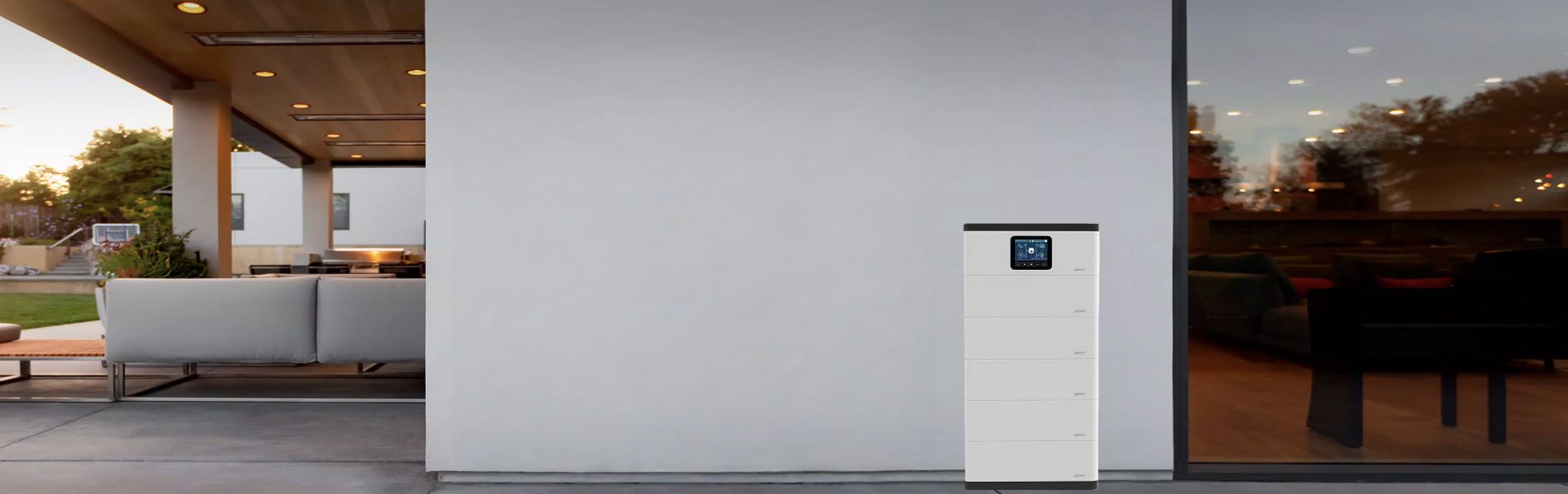
Trabalhamos com diferentes tipos de células, baterias e soluções de sistemas de armazenamento de energia.
Para dúvidas sobre nossos produtos, deixe um comentário e entraremos em contato em até 24 horas.



Trabalhamos com diferentes tipos de células, baterias e soluções de sistemas de armazenamento de energia.
Para dúvidas sobre nossos produtos, deixe um comentário e entraremos em contato em até 24 horas.
A temperatura é um dos fatores mais importantes que afetam desempenho da bateria de lítio Em aplicações cotidianas e industriais, as baterias de lítio são essenciais. Seja para armazenamento de energia solar, veículos elétricos, trailers, sistemas marítimos ou energia de reserva residencial, entender como a temperatura as afeta pode ajudar a evitar problemas comuns e prolongar significativamente a vida útil da bateria.
Em clima frio, desempenho da bateria de lítio diminui drasticamente. Quando a temperatura cai abaixo de 0°C (32°F), o eletrólito torna-se mais viscoso, retardando o movimento dos íons de lítio. Isso resulta em maior resistência interna, capacidade reduzida (frequentemente com perda de 20 a 50% a -20°C), carregamento mais lento e menor potência de saída. Em casos extremos, pode ocorrer deposição de lítio metálico, causando danos irreversíveis. Para usuários em climas frios ou instalações externas, a escolha de um eletrólito com maior capacidade é recomendada. baterias de lítio resistentes à temperatura O uso de eletrólitos avançados para baixas temperaturas e um sistema de gerenciamento de bateria (BMS) inteligente é crucial.
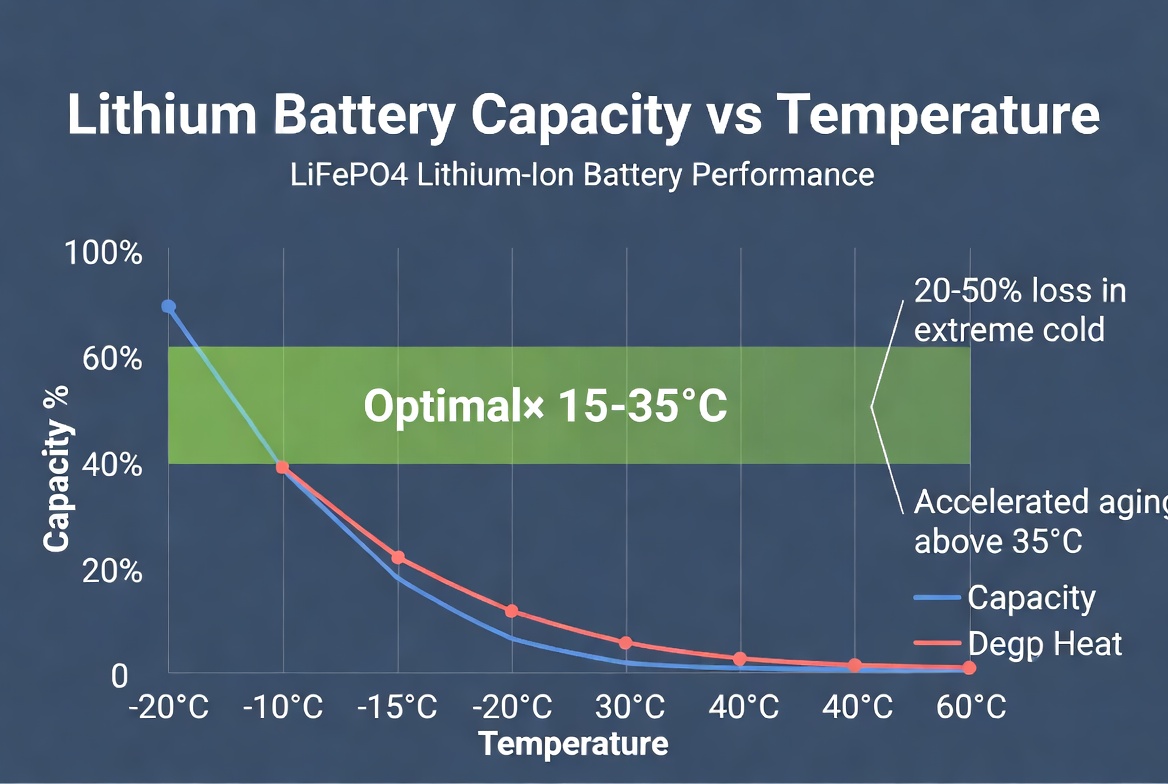
Altas temperaturas representam outro desafio sério. Embora um aquecimento moderado em torno de 20-30 °C possa melhorar ligeiramente o desempenho, a exposição prolongada acima de 35 °C acelera as reações químicas dentro das células. Isso leva a uma decomposição mais rápida do eletrólito, aumento da autodescarga e envelhecimento acelerado — podendo reduzir pela metade a vida útil da bateria. Em regiões quentes ou espaços fechados, o gerenciamento térmico inadequado também pode aumentar os riscos de segurança, como a fuga térmica.
A faixa de temperatura operacional ideal para a maioria das baterias de íon-lítio modernas, especialmente as de química LiFePO4, é de 15 °C a 35 °C. Dentro dessa faixa ideal, as baterias fornecem quase 100% de sua capacidade nominal, suportam carregamento/descarregamento rápido e eficiente e atingem sua vida útil esperada de 2.000 a mais de 6.000 ciclos. Baterias de lítio de alta qualidade geralmente incluem um sofisticado Sistema de Gerenciamento de Bateria (BMS) que monitora a temperatura em tempo real e ajusta automaticamente os parâmetros de carregamento ou limita a operação para proteger as células.
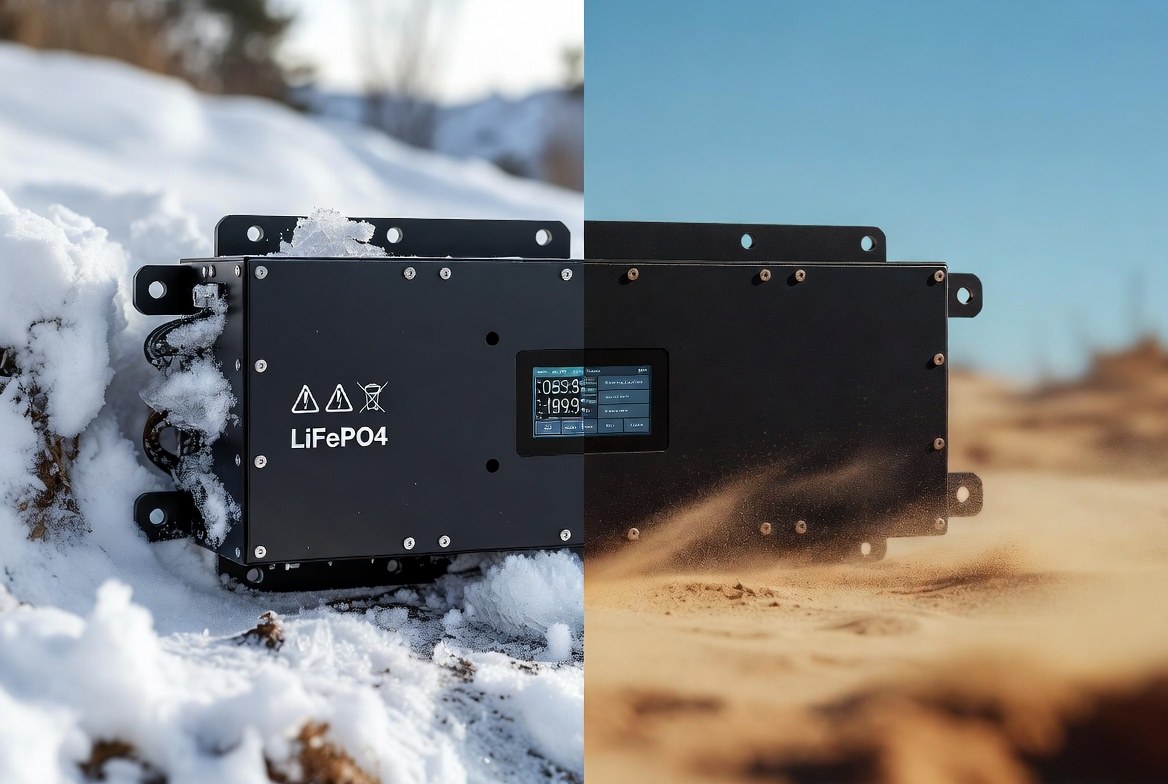
Além do funcionamento básico, o armazenamento e a manutenção adequados também são importantes. Quando não estiverem em uso, armazene as baterias de lítio em um ambiente fresco e seco (idealmente entre 10 e 25 °C) e evite a exposição direta à luz solar. Para condições extremas, considere o uso de invólucros isolados para baterias, sistemas de resfriamento passivo ou soluções de controle ativo de temperatura. Essas medidas podem melhorar significativamente a vida útil das baterias a longo prazo. temperatura ideal da bateria de lítio Controlar e reduzir a frequência de substituição.
Em comparação com as baterias de chumbo-ácido tradicionais, as baterias de íon-lítio são mais sensíveis a temperaturas extremas, mas oferecem um desempenho geral muito melhor quando gerenciadas adequadamente. Seu peso mais leve, maior densidade de energia e maior vida útil as tornam a escolha preferida para aplicações exigentes — desde que os usuários levem em consideração os fatores ambientais.
Ao selecionar soluções de lítio bem projetadas para ampla tolerância à temperatura, você pode desfrutar de uma potência consistente independentemente das condições climáticas. Nossos pacotes de baterias de lítio premium são construídos com proteção BMS robusta e células de alta qualidade para oferecer desempenho confiável tanto em invernos rigorosos quanto em verões escaldantes.
Investir no certo desempenho da bateria de lítio Essa solução não só melhora a eficiência, como também reduz o custo total de propriedade ao longo do tempo. Seja para energia solar residencial, armazenamento de energia comercial ou aplicações móveis, o uso com controle de temperatura é fundamental para obter o máximo valor das suas baterias.
Perguntas frequentes
P1: Qual é a temperatura ideal para o desempenho de uma bateria de lítio?
A: A faixa de temperatura ideal para a maioria das baterias de lítio (especialmente LiFePO4) é 15°C a 35°CDentro dessa faixa de preço, as baterias oferecem capacidade máxima, carregamento mais rápido e maior vida útil.
Q2: As baterias de lítio podem ser usadas em climas frios?
A: Sim, mas o desempenho cai abaixo de 0°C. A -20°C, a capacidade pode diminuir de 20 a 50%. Use baterias de lítio resistentes à temperatura Com eletrólitos de baixa temperatura e proteção BMS para melhor desempenho em climas frios.
P3: As altas temperaturas danificam as baterias de íon-lítio?
R: Sim. A exposição prolongada acima de 35°C acelera o envelhecimento, aumenta a autodescarga e pode reduzir a vida útil em até 50%. Um bom gerenciamento térmico e um sistema de gerenciamento predial (BMS) de qualidade são essenciais em climas quentes.
Q4: Como a temperatura afeta o carregamento da bateria de lítio?
A: Em condições de frio, o carregamento fica mais lento ou pode ser interrompido por segurança. Em altas temperaturas, o carregamento gera mais calor e pode acionar os circuitos de proteção. Siga sempre as instruções do fabricante e utilize baterias com BMS (Sistema de Gerenciamento de Bateria).
Q5: Devo armazenar baterias de lítio em uma temperatura específica?
R: Sim. Armazene-os em local fresco e seco, entre 10°C e 25°C. Evite temperaturas de congelamento e luz solar direta para prevenir perda de capacidade e danos a longo prazo.
Q6: As baterias LiFePO4 são melhores para temperaturas extremas?
A: Sim. A química do LiFePO4 é geralmente mais estável em amplas faixas de temperatura em comparação com outros tipos de íon-lítio, oferecendo maior segurança e longevidade em aplicações exigentes, como energia solar e uso em veículos recreativos.
P7: Como posso proteger minhas baterias de lítio contra danos causados pela temperatura?
A: Escolha baterias com BMS avançado, utilize invólucros isolados, instale-as em áreas sombreadas ou ventiladas e monitore a temperatura regularmente. Nossos pacotes de baterias de lítio premium incluem proteção contra superaquecimento integrada para um desempenho confiável.

Deixe um recado
Escaneie para o WeChat :

Hi! Click one of our members below to chat on